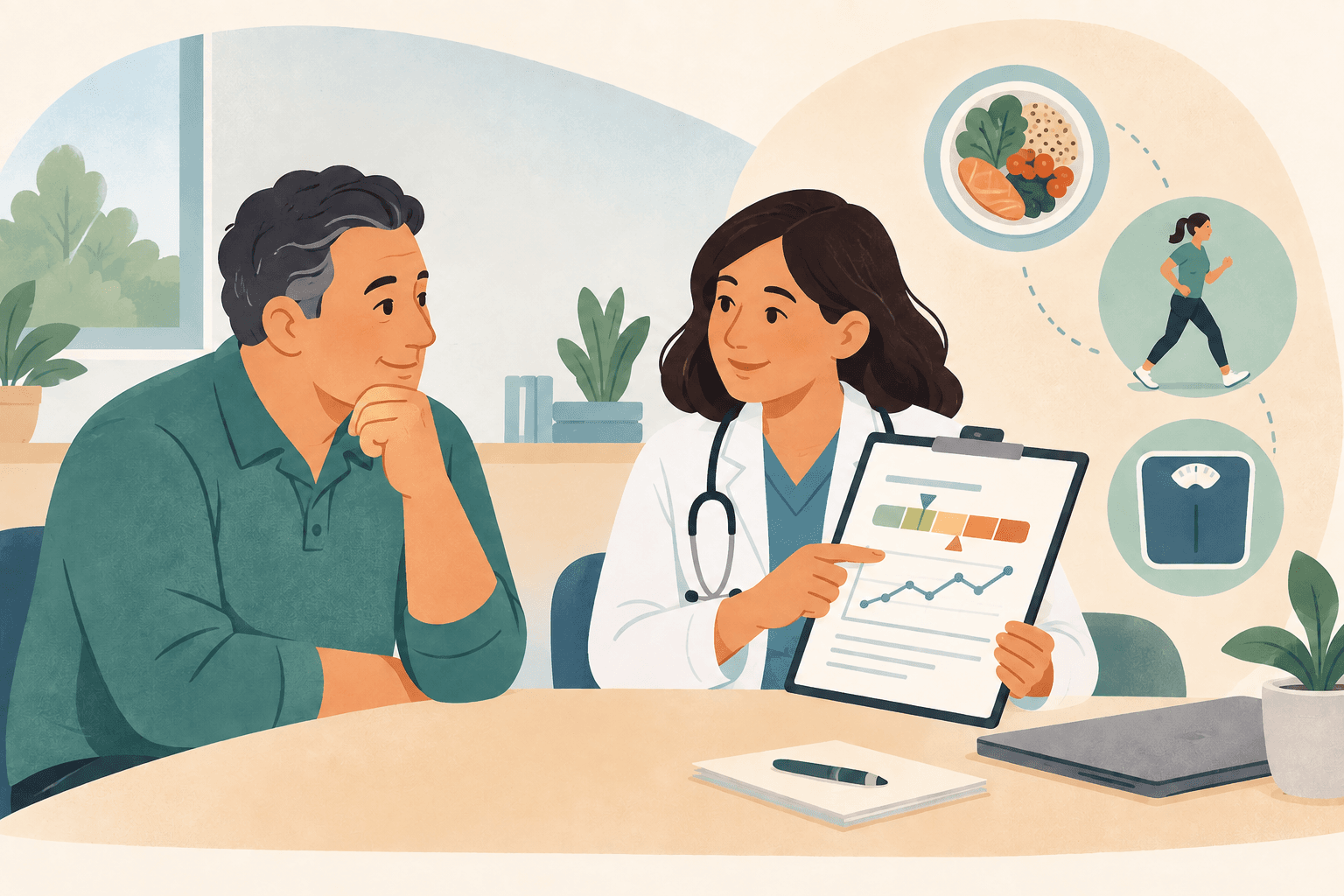
Prediabetes means your blood sugar is above normal but below the threshold for type 2 diabetes — an A1C between 5.7 and 6.4 percent, or a fasting glucose between 100 and 125 mg/dL. It usually causes no symptoms, affects about one in three American adults, and is frequently reversible. In the largest trial to test it, losing 5 to 7 percent of body weight and walking 150 minutes a week cut the risk of progressing to diabetes by 58 percent.
Key takeaways
Prediabetes is defined as an A1C of 5.7 to 6.4 percent or a fasting glucose of 100 to 125 mg/dL.
About one in three American adults has it, and most don't know — there are no reliable symptoms.
Cardiovascular and kidney risk start rising before blood sugar reaches the diabetes range.
Lifestyle change outperformed metformin in the Diabetes Prevention Program: 58 percent risk reduction versus 31 percent.
If you have prediabetes, get your blood sugar rechecked at least once a year.
Prediabetes is one of those diagnoses that catches people off guard. You feel fine. You don't have symptoms. But your doctor tells you your blood sugar is higher than it should be, and if you don't make changes, you're heading toward type 2 diabetes. That's a lot to process. Here's what prediabetes actually means and what you can do about it.
What prediabetes is
Prediabetes means your blood sugar levels are elevated but not high enough to be classified as type 2 diabetes. Specifically, your A1C is between 5.7 and 6.4 percent, or your fasting glucose is between 100 and 125 mg/dL. Your body is starting to resist insulin, the hormone that helps glucose enter your cells.
About one in three American adults has prediabetes. Most of them don't know it. That's the problem. Prediabetes doesn't come with obvious symptoms, so people don't realize anything is wrong until their labs come back or they progress to full diabetes. It's one of the reasons we check a standard set of labs at your annual visit rather than waiting for symptoms to show up.
Why it matters
Prediabetes isn't just a warning sign. It's already doing damage. Studies show that people with prediabetes have an increased risk of heart disease, stroke, and kidney problems even before they develop diabetes. The elevated blood sugar is affecting your blood vessels and nerves.
Without intervention, about 15 to 30 percent of people with prediabetes develop type 2 diabetes within five years. That's not inevitable. You can reverse prediabetes or at least delay its progression significantly.
What causes it
The main drivers are excess weight, especially around the abdomen, physical inactivity, and genetics. If your parents or siblings have type 2 diabetes, your risk is higher. Age matters too. The risk increases after 45, though we're seeing more prediabetes in younger adults now.
Insulin resistance is the underlying mechanism. Your cells stop responding effectively to insulin, so your pancreas pumps out more to compensate. Eventually, the pancreas can't keep up, and blood sugar rises.
How to reverse it
The Diabetes Prevention Program, published in the New England Journal of Medicine in 2002, showed that lifestyle changes reduced the risk of developing diabetes by 58 percent. That's more effective than any medication studied. The intervention was straightforward: lose 5 to 7 percent of body weight and get 150 minutes of moderate exercise per week.
For a 200-pound person, that's 10 to 14 pounds. Not a dramatic transformation. But it makes a significant difference in insulin sensitivity. The exercise doesn't have to be intense. Brisk walking counts. Swimming, cycling, dancing, anything that gets your heart rate up.
Diet matters as much as exercise. Cut back on sugary drinks, refined carbohydrates, and processed foods. Focus on vegetables, lean protein, whole grains, and healthy fats. The same dietary approach that works for diabetes works for prediabetes.
Medications
Metformin is sometimes prescribed for prediabetes, especially in people with a BMI over 35 or women with a history of gestational diabetes. It reduces liver glucose production and improves insulin sensitivity. In the Diabetes Prevention Program, metformin reduced diabetes risk by 31 percent, which is meaningful but less effective than lifestyle changes.
Other medications like GLP-1 agonists are being studied for prediabetes, but they're not standard treatment yet. For most people, lifestyle changes are the first line and often sufficient. Where weight is the main driver, a supervised medical weight management plan can be part of the conversation.
Monitoring
If you have prediabetes, you should have your blood sugar checked at least once a year. Some doctors recommend every six months depending on your risk factors. The goal is to catch any progression early and adjust your approach.
A1C is the most common test. It measures your average blood sugar over the past two to three months. Fasting glucose and oral glucose tolerance tests are also used. Your doctor will determine which test is most appropriate for your situation.
The bottom line
Prediabetes is reversible for many people. It requires commitment to lifestyle changes, but those changes don't have to be extreme. Small, sustainable shifts in diet and activity can move your numbers in the right direction. The key is starting now, before prediabetes progresses to diabetes.
Common questions about prediabetes
What A1C level is considered prediabetes?
An A1C of 5.7 to 6.4 percent. Below 5.7 percent is normal, and 6.5 percent or higher on two tests means type 2 diabetes. A fasting glucose of 100 to 125 mg/dL puts you in the same category.
Can prediabetes be reversed?
For many people, yes. Blood sugar can return to the normal range with weight loss and regular activity, and the risk of progressing to diabetes drops sharply even when the numbers don't fully normalize. The earlier you start, the better the odds.
Do I need medication for prediabetes?
Most people don't start there. Metformin is usually reserved for higher-risk patients — a BMI over 35, a history of gestational diabetes, or blood sugar that keeps climbing despite lifestyle changes. It's a decision to make with your physician, not a default.
Does prediabetes have symptoms?
Generally no, which is why it goes undetected so often. It's found on routine lab work. If you're having increased thirst, frequent urination, or unexplained weight loss, those point toward diabetes rather than prediabetes and should be evaluated promptly.
How we can help
At FloMD Primary Care in Cypress, TX, serving Northwest Houston and surrounding communities, we work with prediabetic patients regularly. We can help you understand your lab results, create a realistic plan for diet and exercise, and monitor your progress over time.
If you've been told you have prediabetes and you're not sure where to start, schedule an appointment with us. We'll put together a plan that fits your life and check in regularly to make sure you're moving in the right direction.
