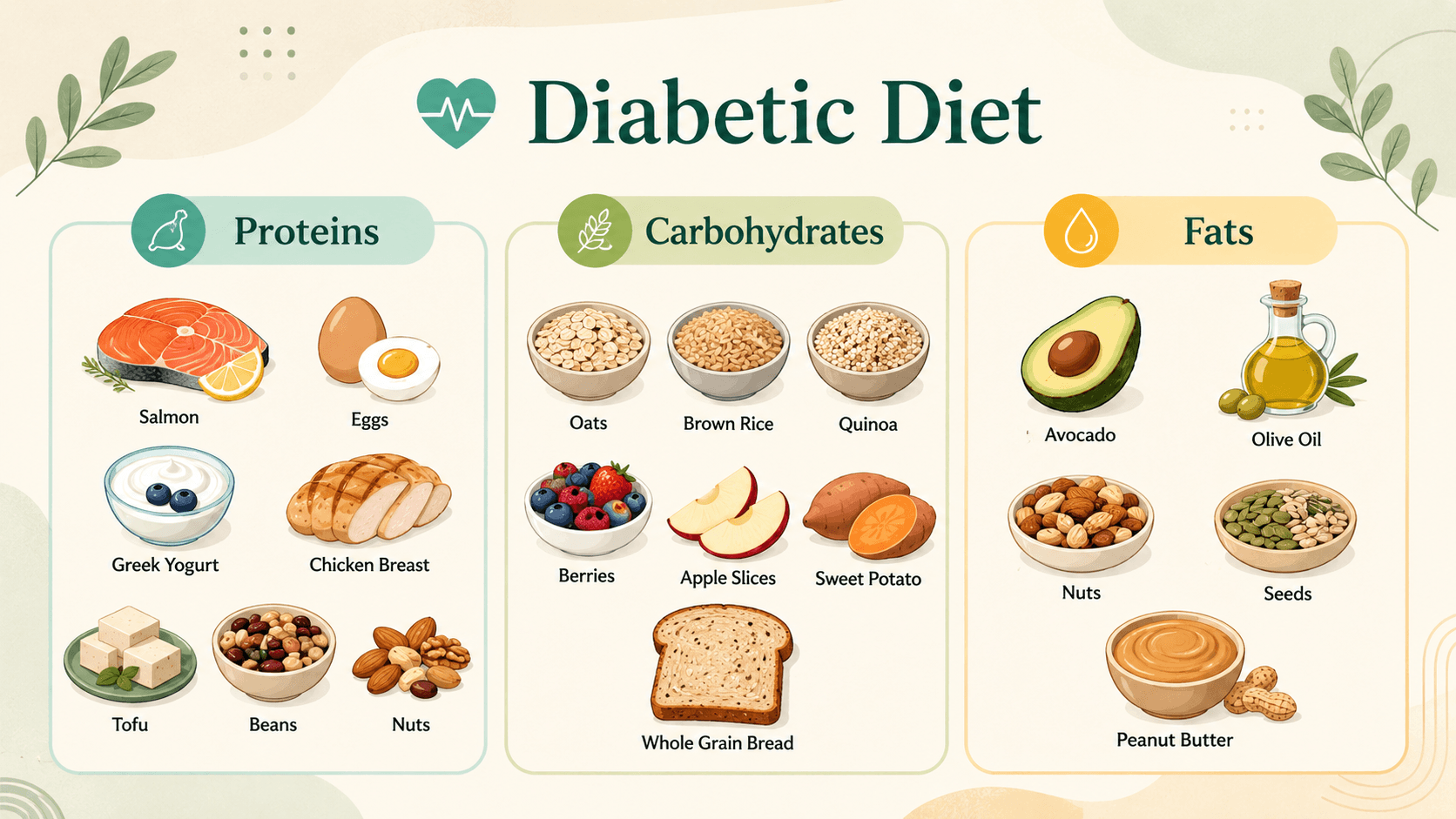
A diabetic diet is not a special diet — it is a balanced eating pattern with deliberate attention to carbohydrates. The simplest version: half your plate non-starchy vegetables, a quarter lean protein, a quarter complex carbohydrate, with a small amount of healthy fat added. Limit refined carbs and cut liquid sugar entirely. Eat at consistent times rather than loading up at one meal.
Key takeaways
Carbohydrates affect blood sugar most, but the goal is choosing and spacing them, not eliminating them.
The plate method works without counting carbs or weighing food.
Sugary drinks are the single highest-impact thing most patients can cut.
"Sugar-free" does not mean carb-free — check total carbohydrate, not sugar content.
Meal timing matters. Long gaps followed by a large meal produce bigger spikes.
If you've been diagnosed with diabetes or prediabetes, the first thing your doctor probably told you was to watch what you eat. That advice is correct, and it's also about as helpful as telling someone who can't swim to just move their arms. What does a diabetic diet actually look like? What goes on the plate? What stays off it?
I'm going to walk you through what I tell my patients in the office. No complicated meal plans, no expensive specialty foods. Just a clear picture of what to eat, what to limit, and why it matters for your blood sugar.
What a diabetic diet actually means
A diabetic diet isn't a separate diet. It's a regular, balanced eating pattern with specific attention to carbohydrates. Carbs have the biggest impact on your blood sugar, so understanding which carbs to choose and how much to eat at each meal is the foundation of everything else.
The goal isn't to eliminate carbs entirely. Your body needs glucose for energy. The goal is to keep your blood sugar in a stable range by choosing the right types of carbs, pairing them with protein and healthy fats, and spreading them out across the day instead of loading up at one meal.
Foods to build your meals around
Start with non-starchy vegetables. Broccoli, spinach, green beans, peppers, zucchini, cauliflower, tomatoes. These are low in carbs and high in fiber, which slows down how fast sugar enters your bloodstream. Fill half your plate with these at every meal.
Add lean protein. Chicken breast, turkey, fish, eggs, tofu, Greek yogurt. Protein doesn't spike your blood sugar the way carbs do, and it keeps you full longer. A palm-sized portion, roughly a quarter of the plate.
For the remaining quarter, pick complex carbohydrates. Brown rice, quinoa, sweet potato, whole grain bread, oats, beans, and lentils. These digest more slowly than refined carbs because they still have their fiber intact. That fiber is doing a lot of work for you.
Healthy fats get added rather than taking up their own section of the plate. Olive oil on the vegetables, a few slices of avocado, a small handful of nuts, or choosing a fatty fish like salmon as your protein. Fat also slows digestion, which helps blunt the rise after a meal.
Foods to limit or avoid
White bread, white rice, regular pasta, and pastries. These are refined carbohydrates that hit your bloodstream as sugar fast. If you're going to eat them, keep portions small and always pair them with protein or fat to slow things down.
Sugary drinks are worse than solid sugar in some ways. Soda, sweet tea, fruit juice, energy drinks. Liquid sugar absorbs almost immediately. A single can of soda can send your blood sugar sharply upward within half an hour. Water, unsweetened tea, or sparkling water with lemon are better choices.
Processed snacks and packaged foods often hide sugar and refined flour. Read labels. If sugar is in the first three ingredients, put it back. Watch out for names like high fructose corn syrup, cane juice, dextrose, and maltose. They're all sugar.
Alcohol deserves a mention. It can cause blood sugar to drop unpredictably, especially if you're on insulin or certain medications. If you drink, do it with food and keep it moderate. Beer and sweet cocktails are the worst offenders.
The plate method
If you don't want to count carbs or track every gram, use the plate method. It's what I recommend to most of my patients because it works without requiring a food scale or an app.
Take a standard dinner plate. Fill half of it with non-starchy vegetables. Fill one quarter with lean protein. Fill the last quarter with a complex carbohydrate like brown rice or sweet potato. Add a small amount of healthy fat, like olive oil on the vegetables or a few slices of avocado.
That's your meal. Three times a day, with a small snack if you need it. This approach naturally limits your carb intake without requiring you to measure anything. Most patients find their blood sugars improve within a couple of weeks of switching to this pattern.
Timing matters as much as content
When you eat affects your blood sugar almost as much as what you eat. Skipping breakfast and then eating a large lunch causes a bigger spike than spreading those same calories across two meals. Your body handles food better when it comes in steady amounts rather than all at once.
Try to eat at roughly the same times each day. Don't go more than four or five hours between meals. If you're going to exercise, eat something with carbs beforehand so your blood sugar doesn't drop too low. And if you're on medications that can cause low blood sugar, keep a fast-acting carb source like glucose tablets or juice nearby.
It is also worth knowing that the same meal affects different people differently. If you are following the advice here and your numbers are not moving, that is information, not failure.
Common mistakes I see
Eating too few carbs at dinner and then snacking all evening. That late-night snacking keeps your blood sugar elevated overnight, which is why your morning readings are often the highest of the day.
Assuming "sugar-free" means "safe." Sugar-free cookies and candies often have sugar alcohols or starches that still affect blood sugar. Check the total carbohydrate count on the label, not just the sugar content.
Cutting out all carbs. Some patients go low-carb or keto and see good short-term results, but many report fatigue, constipation, and difficulty sticking with it long-term. A moderate, balanced approach is more sustainable for most people.
Making it stick
The best diet for diabetes is the one you can actually follow. That means building meals around foods you enjoy, not forcing yourself to eat things you hate. If you don't like kale, don't eat kale. There are dozens of other vegetables that work just as well.
Start with one or two changes. Swap white rice for brown rice. Replace soda with water at lunch. Add a serving of vegetables to your dinner plate. Small shifts add up over weeks and months. You don't have to overhaul everything overnight.
Common questions about eating with diabetes
Can I still eat fruit?
Yes. Whole fruit comes with fiber, which slows sugar absorption, and it is a different proposition from fruit juice. Berries, apples, and pears are good choices. Portion still matters, and pairing fruit with protein or fat — an apple with peanut butter, berries with Greek yogurt — blunts the rise further.
Do I have to count carbs?
Not necessarily. Carb counting is valuable for patients on insulin who adjust doses to meals. For most people with type 2 diabetes managed on oral medication, the plate method achieves a similar result with far less effort, and effort is what determines whether you keep doing it.
Is a keto diet good for diabetes?
It can lower blood sugar substantially in the short term, and some patients do well on it. The issues are sustainability and safety on certain medications — if you are on insulin or a sulfonylurea, a sudden sharp drop in carbohydrate intake can cause hypoglycemia, so doses need adjusting alongside the diet. Talk to us before starting rather than after.
Can I ever have dessert?
Yes, and patients who are told never to do anything abandon the whole plan within a month. Keep the portion small, have it after a balanced meal rather than alone, and treat it as occasional rather than daily. A diet you resent is a diet you stop following.
How we can help
At FloMD Primary Care in Cypress, TX, serving Northwest Houston and surrounding communities, we work with diabetic patients every day. We can help you build an eating plan that fits your lifestyle, review your medications, and monitor the labs that tell us whether your diet changes are actually working.
If you've been diagnosed with diabetes or prediabetes and you're not sure where to start with your diet, schedule an appointment with us. We'll put together a plan that's realistic for your life and check in regularly to make sure it's making a difference.
