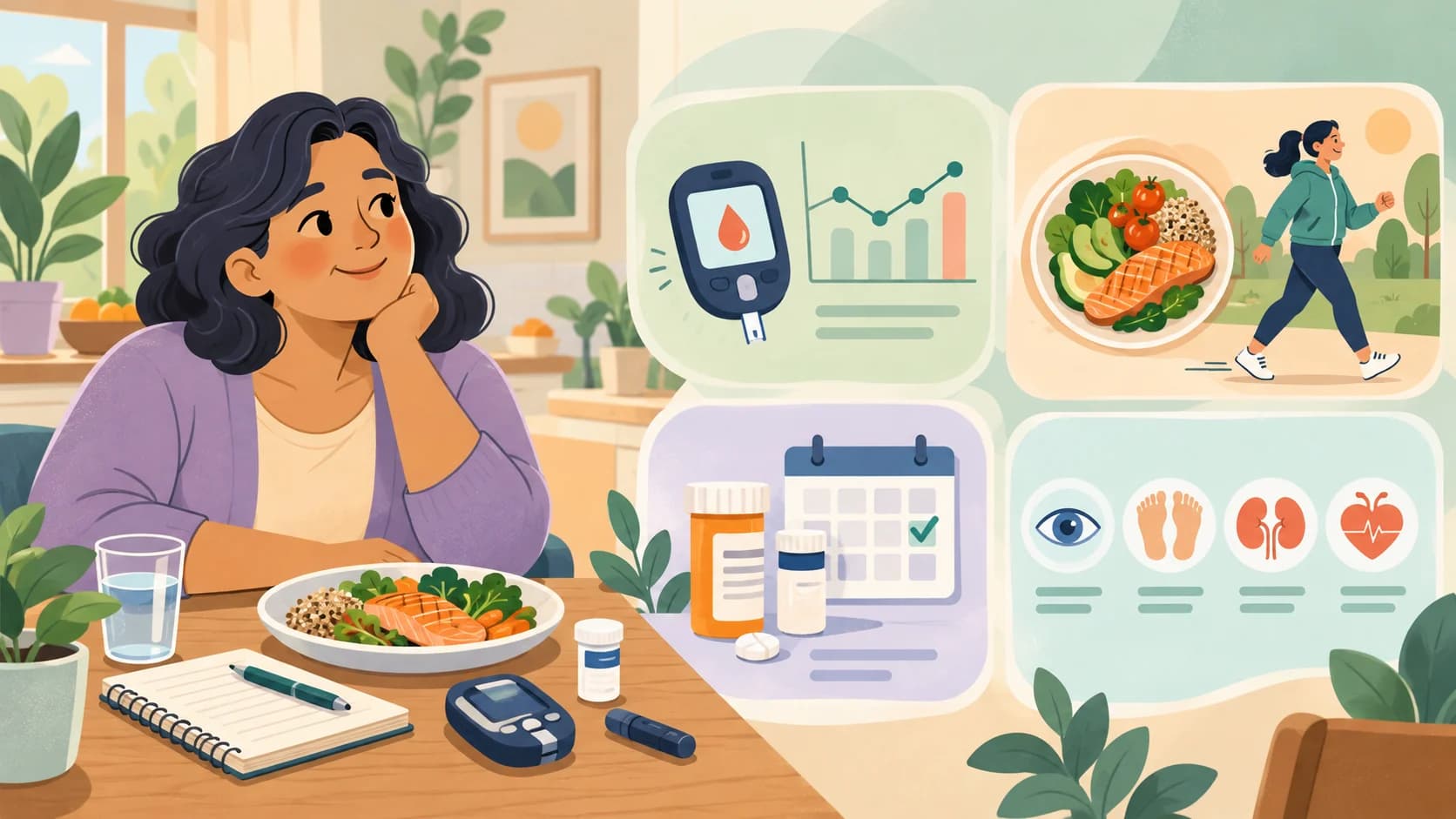

After a new type 2 diabetes diagnosis, the first few months are about four things: understanding your numbers, starting a treatment plan you can actually follow, getting the baseline checks that protect your eyes, kidneys, nerves and heart, and coming back to see whether it is working. You do not have to change everything in the first week. Most people with type 2 diabetes can reach good control, and the earlier it happens, the more complications it prevents.
Key takeaways
Ask what your personal A1C goal is. For many adults it is below 7 percent, but it is set individually.
Diabetes care is more than blood sugar. Blood pressure and cholesterol matter just as much for heart risk.
Get a dilated eye exam, a foot exam, and a kidney urine test in the first year, then yearly.
A short walk after meals measurably lowers post-meal blood sugar.
The meaningful recheck is about three months out, because that is what A1C measures.
A new diabetes diagnosis is a lot to take in. Most patients leave the visit with a prescription, a glucose meter, and a head full of questions. That is normal. The first month is about building a plan, not being perfect.
The first month
Learn the basics of how food affects your blood sugar. Our guide to what to eat and what to avoid covers the plate method, which works without counting carbs.
Check your sugar as directed. How often depends on your medications — some patients need daily checks, others only occasional ones — so ask rather than guess.
Schedule your follow-up before you leave the office.
Ask about your A1C goal and what counts as good control for you.
Move your body after meals, even with ten-minute walks.
Cut sugary drinks first. For most patients it is the single highest-impact change.
Do not try to fix everything in the first week.
The checks that protect you long term
Diabetes complications develop quietly, which is why baseline checks matter even when you feel well. In the first year, and then generally once a year, you should have:
A dilated eye exam with an eye doctor, to look for early retinal changes that are treatable when caught early.
A foot exam checking sensation and circulation, since nerve damage can make injuries easy to miss.
Kidney tests: a blood test for kidney function and a urine test for protein, which shows kidney stress years before function drops.
Cholesterol and blood pressure, because heart disease, not blood sugar itself, is the leading cause of death in people with diabetes.
Vaccines including flu, pneumococcal, and hepatitis B, which are recommended for most adults with diabetes.
About medication
Metformin is the usual starting medication for many patients: inexpensive, well studied, and it rarely causes low blood sugar on its own. Its main downside is stomach upset, which usually settles and is reduced by taking it with food or using the extended-release form.
Diabetes treatment has changed a great deal in the last decade. Several newer medication classes do more than lower blood sugar — they also protect the heart and kidneys, and some help with weight. If you have heart disease, kidney disease, or heart failure, those benefits can shape which medication we start with. Which one fits you depends on your other conditions, your insurance, and how you tolerate it.
Ask whether your medication can cause low blood sugar. Some can, most commonly insulin and an older class called sulfonylureas. If yours can, learn the warning signs — shakiness, sweating, confusion, a racing heart — and keep a fast-acting sugar source with you.
Show up for the follow-up
In Cypress, I see a lot of patients who do well once they have a clear plan. The ones who struggle are usually the ones who get diagnosed and then disappear for a year. Show up for the follow-up. That is where the real work starts. We explain why in our post on why follow-up visits matter.
Common questions
Can type 2 diabetes be reversed?
Some patients reach remission — normal blood sugar without medication — particularly with significant weight loss early after diagnosis. It is not guaranteed, and it is not a cure, since blood sugar can rise again. But it is a realistic goal for some people, and getting closer to it improves outcomes even if you never fully get there.
Will I need insulin?
Most people with newly diagnosed type 2 diabetes do not start on insulin. Some need it later, or temporarily when blood sugar is very high at diagnosis. Needing insulin is not a failure — it is one tool among several.
Do I have to give up carbs entirely?
No. The goal is choosing better carbohydrates, keeping portions sensible, and spreading them across the day. Very low-carb diets can lower blood sugar quickly but are hard to sustain, and they require medication adjustments if you take anything that can cause low blood sugar.
Is there education available beyond my appointments?
Yes. Diabetes self-management education programs, often run by certified diabetes educators, are covered by Medicare and many other plans and are consistently linked to better control. Ask us for a referral — it is underused and genuinely helpful.
If you have just been diagnosed, or you were diagnosed a while ago and never really got a plan, schedule a visit at FloMD Primary Care in Cypress. We will go through your numbers, set realistic goals, and get the baseline checks done. If your labs were borderline rather than diabetic, our post on prediabetes and how to reverse it is the better place to start.
