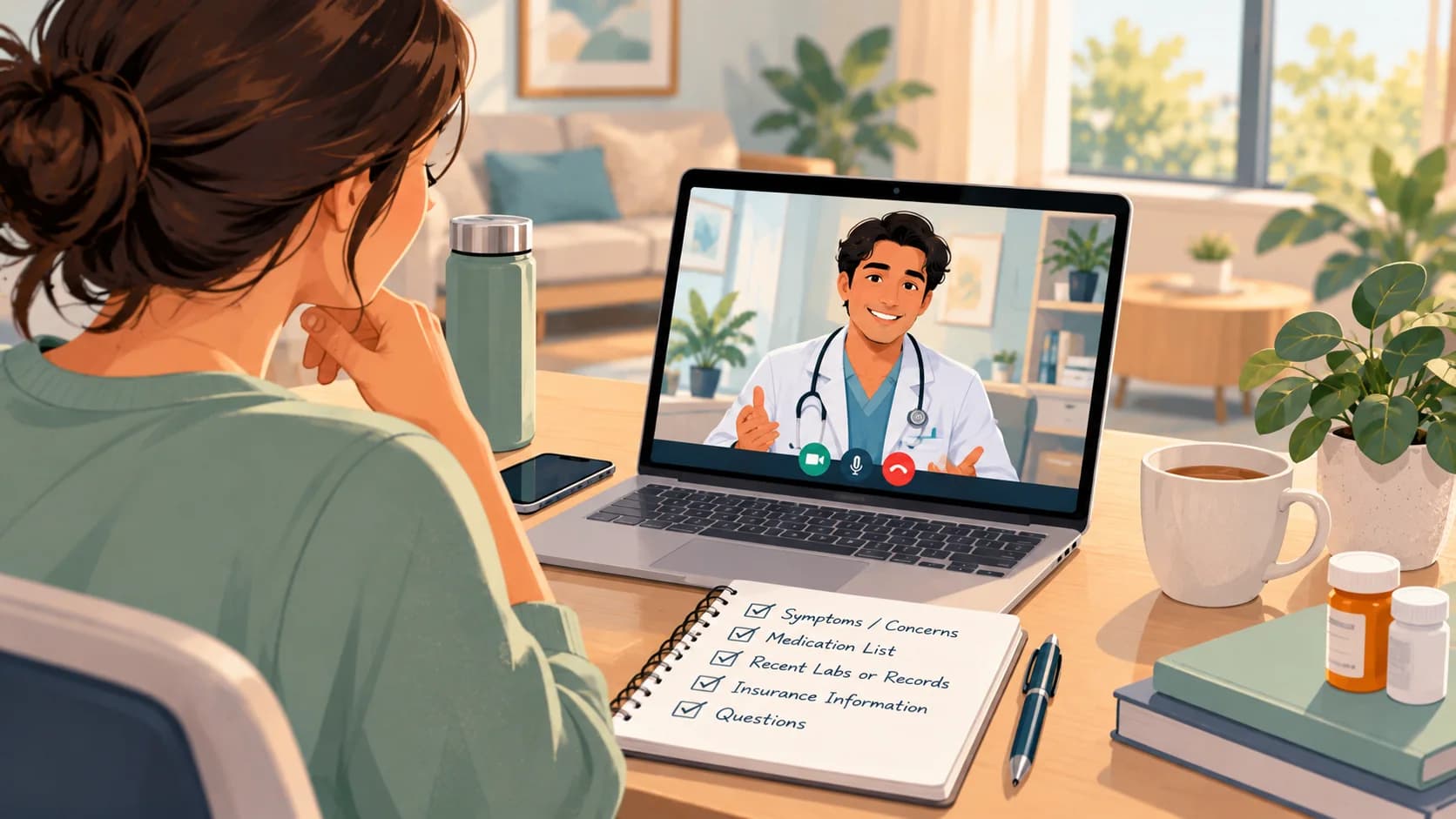

To prepare for a telehealth visit, find a quiet, well-lit spot with a stable connection, test your camera and microphone beforehand, and have your medication list, any home readings, and your top one or two concerns ready. Be somewhere in Texas at the time of the visit, since your doctor's license applies to where you are, not where you live. Telehealth works well for follow-ups, medication checks, and lab reviews; anything that needs an exam, a blood draw, or a measurement we have to take ourselves still needs to be in person.
Key takeaways
Good light, a stable connection, and a quiet room make more difference than the device you use.
Have your medications and any home blood pressure or glucose readings in front of you.
You need to be physically in Texas during the visit.
Some medications have extra rules for virtual prescribing, and some problems simply need an exam.
Do not use telehealth for emergencies. Call 911.
Telehealth is here to stay, and for a lot of visits in Cypress it works really well. Follow-ups, medication checks, lab reviews, even some sick visits can be done from your couch. But a bad setup can turn a 15-minute visit into a frustrating call where nothing gets accomplished.
How to prepare
Find a quiet room with good lighting. Sit facing a window or a lamp, not a dark corner.
Use a stable internet connection if possible. Wi-Fi is usually better than cell service.
Have your medication list ready, including doses — or the bottles themselves.
Write down your top 1 or 2 concerns before the call.
If you use a home blood pressure cuff, glucose meter, thermometer, or scale, have recent readings nearby.
Test your camera and microphone a few minutes before the visit, and keep your phone charged as a backup.
Do not join from a moving car. It is unsafe, and the connection rarely holds.
If the visit is about something visible, like a rash or swelling, find good light in advance and be ready to show it on camera. A clear photo taken beforehand can help too.
What works well by video, and what does not
Video works well for reviewing lab results and home readings, adjusting medications, checking on a chronic condition that is stable, discussing side effects, and many routine follow-up visits.
Texas telehealth rules allow a lot of primary care to be done virtually, but not everything. If I need to listen to your lungs, feel your abdomen, check your blood pressure myself, or draw labs, that has to happen in the office. Some medications, particularly controlled substances, also carry additional federal rules for virtual prescribing. If your visit falls into one of those categories, we will tell you up front rather than after you have logged on.
Telehealth is not for emergencies. Chest pain, trouble breathing, stroke symptoms, or severe pain need 911 or an emergency room, not a video call.
Common questions
Is telehealth covered by insurance?
Many plans cover telehealth visits, often with the same cost share as an office visit, but coverage varies by plan and visit type. Check with your insurer or ask our office before booking if cost is a concern.
Can I do a telehealth visit while traveling outside Texas?
Generally no. Physician licensing is based on where the patient is located during the visit. If you will be out of state, reschedule or book the visit for after you return.
Can my first visit be by telehealth?
For most patients, the first visit works best in person, so we can do a baseline exam and vitals. Our new patient guide covers what to expect.
What if the video drops?
Rejoin with the same link. If that fails, we will call you at the number on file, so make sure it is current before your visit.
Used well, telehealth saves you drive time across Cypress and Northwest Houston. Used poorly, it wastes everyone's time. A little preparation makes the difference.
