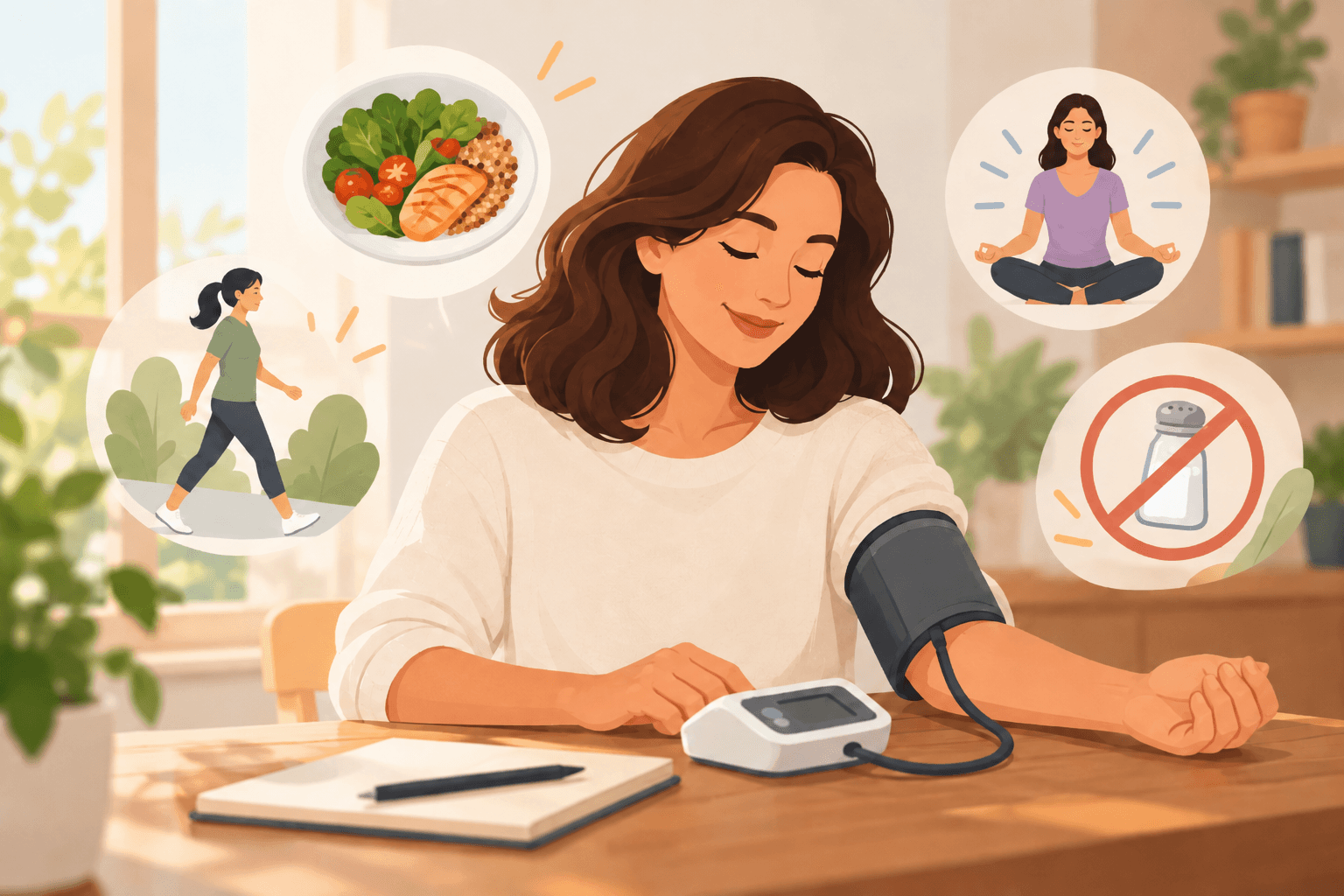

Most of the benefit in blood pressure control comes from a handful of things: cutting sodium at its main sources, walking most days, moderating alcohol, losing some weight if there is weight to lose, and taking medication consistently. You do not have to overhaul your life. The patients whose numbers actually come down are usually the ones who changed three things and kept doing them, not the ones who changed twenty and lasted a fortnight.
Key takeaways
Most dietary sodium comes from packaged and restaurant food, not the salt shaker.
Home readings are more informative than office readings, and easy to do badly.
Blood pressure medication treats the number; it does not cure the condition, so stopping when you feel fine undoes it.
Side effects are usually fixable by changing the drug rather than accepting them.
Summer heat can drop your readings enough to need a dose review.
Most patients do not love being told they have high blood pressure. It usually means medication, diet changes, and a new awareness of salt. But managing it does not have to make you miserable.
The biggest mistake I see is trying to overhaul everything at once. Patients go from their normal routine to some extreme plan, last two weeks, and then quit. I prefer smaller, sustainable changes.
Changes that actually move the needle
Cut back on the obvious salt sources first: fast food, canned soups, and processed snacks.
Walk most days, even if it is only 20 minutes.
Limit alcohol to moderate amounts.
Take your medication consistently, even when you feel fine.
Check your blood pressure at home occasionally.
If you carry extra weight, losing even a modest amount lowers blood pressure measurably.
The salt conversation, more precisely
Patients hear "cut salt" and reach for the shaker on the table. That is a small fraction of the problem. The overwhelming majority of sodium in a typical American diet arrives already inside the food — bread, deli meat, cheese, sauces, canned goods, and restaurant meals, where a single entrée can carry more sodium than a whole day should.
So the practical move is not eating bland food. It is cooking more of your own meals, where you control what goes in, and reading labels on the handful of packaged items you buy most often. Potassium matters here too — vegetables, beans, and fruit help offset sodium's effect, which is part of why produce-heavy eating patterns lower blood pressure.
One caution: salt substitutes are usually potassium-based, and potassium is not safe for everyone, particularly with kidney disease or certain blood pressure medications. Check with us before switching.
How to take your blood pressure properly at home
Home readings are genuinely more useful than the one we take in the office, where nerves and rushing in from the parking lot both inflate the number. But a badly taken home reading is worse than none, because we may act on it.
Sit quietly for five minutes first. No caffeine or exercise for half an hour beforehand.
Feet flat on the floor, back supported, arm resting at heart level on a table.
Cuff on bare skin, not over a sleeve, and sized correctly — a cuff that is too small reads high.
Take two readings a minute apart and record both. Same times each day.
Use an upper-arm monitor. Wrist devices are less reliable.
Bring the log to your visit. A week or two of home numbers tells me more than anything I can measure in a ten-minute appointment.
About the medication
Two things patients get wrong, both understandable. The first is stopping once the numbers look good. The medication is what made them look good; stopping returns you to where you started. The second is quietly tolerating a side effect — the cough from an ACE inhibitor, swelling in the ankles, fatigue — rather than mentioning it.
There are several distinct classes of blood pressure medication, and they fail differently. A side effect from one often disappears entirely on another. Tell us rather than stopping, because patients who quit silently usually do not come back until something has gone wrong.
Living with it in Cypress
I also think context matters. In Cypress, that means accounting for heat, stress, work schedules, and family life. A plan that ignores your reality will not last. A plan that fits your actual week will.
The heat is a real variable here rather than a figure of speech. Summer can lower your readings enough that a dose which was right in February leaves you lightheaded in August, and that is worth a conversation rather than a guess. We cover it in more detail in our post on how heat and humidity affect blood pressure.
Common questions
Will I be on medication for life?
Not necessarily. Patients who lose meaningful weight, cut sodium substantially, and become more active sometimes come off medication or reduce it. That is a decision to make together with monitoring, not by stopping and hoping.
Why is my reading always higher at the doctor's office?
White coat effect is real and common. It is one of the better arguments for home monitoring, because it lets us see what your pressure does across an ordinary week rather than in the least ordinary ten minutes of it.
Does stress cause high blood pressure?
Stress raises blood pressure in the moment, and chronic stress contributes indirectly through sleep, alcohol, eating patterns and inactivity. It is rarely the whole explanation, and "just relax" has never lowered anyone's numbers on its own.
What number should I be aiming for?
It depends on your age, your other conditions, and how you tolerate treatment, so the right target is individual rather than universal. Ask us what yours is and why — patients who know their target do better than patients who just take the pills.
If your blood pressure has been creeping up, or you are on medication and not sure it is working, come in and let us look at it properly. At FloMD Primary Care in Cypress we will go through your readings, your medications, and what is realistic to change in your actual week.
