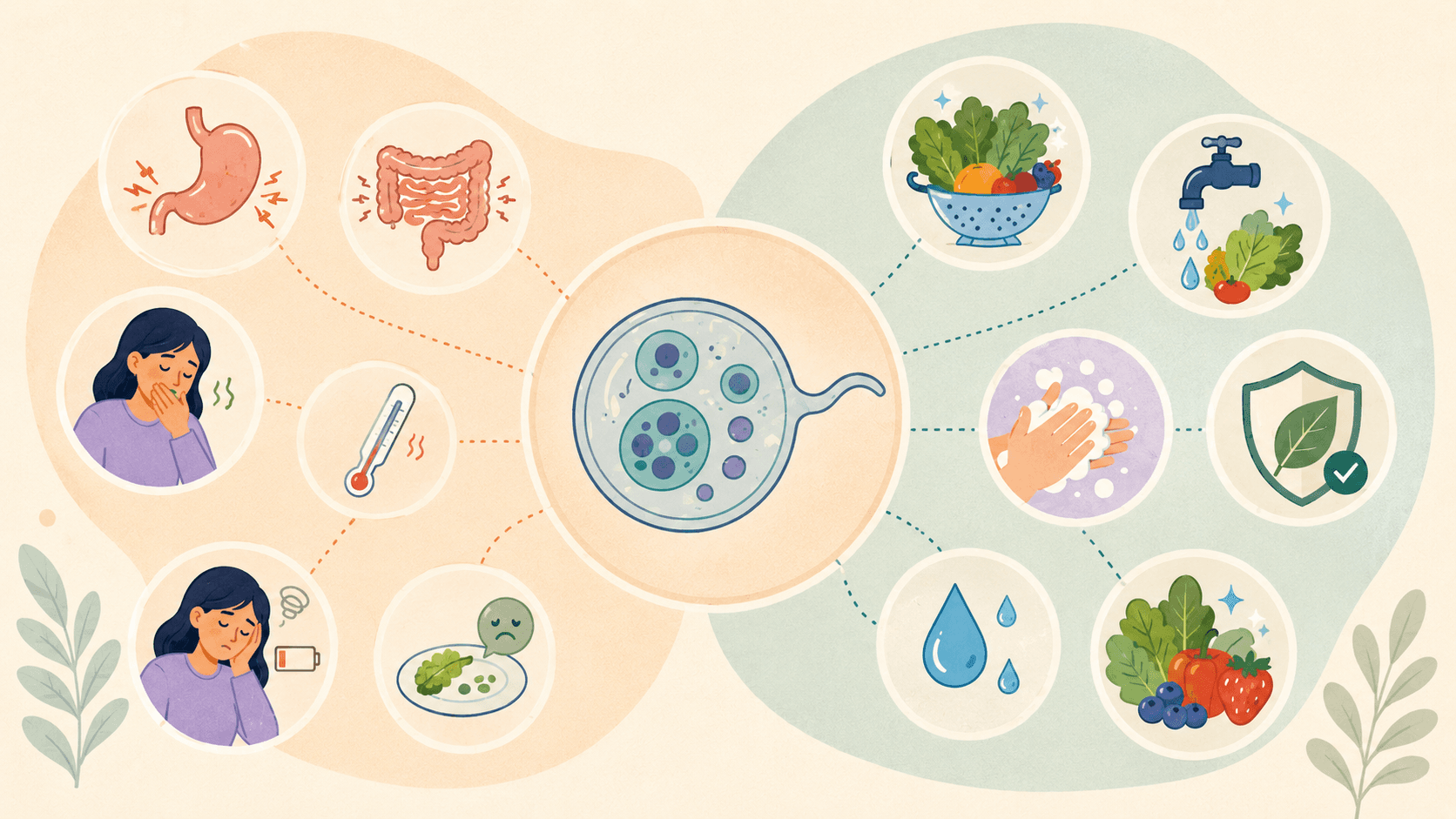

Cyclospora is a parasite spread through contaminated fresh produce, not from person to person. It causes watery, often relapsing diarrhea that typically begins about a week after exposure and can persist for weeks without treatment. Standard stool cultures miss it — it requires specific testing. It responds well to antibiotic treatment, usually within days.
Key takeaways
Symptoms usually begin about a week after exposure, later than most foodborne illness.
The diarrhea is characteristically watery and can come and go over weeks.
It requires specific stool testing — ask for it by name if you suspect it.
Washing helps but does not reliably remove it; heat does.
It is not passed directly between people, so household spread is not the concern.
Cyclospora is a parasite that causes an intestinal infection called cyclosporiasis. It is not as well known as E. coli or salmonella, but it turns up regularly in produce-linked outbreaks. Here is what you need to know.
What is cyclospora?
Cyclospora cayetanensis is a single-celled parasite that infects the small intestine. It's transmitted through food or water contaminated with feces containing the parasite. Unlike bacteria, cyclospora needs days to weeks after being passed in stool to become infectious, which means direct person-to-person transmission is unlikely.
The parasite is more common in tropical and subtropical regions, but outbreaks in the United States have increased over the past decade. Most U.S. cases are linked to imported fresh produce, particularly leafy greens, berries, and herbs.
Symptoms
The hallmark symptom is watery, explosive diarrhea that can be persistent and relapsing. Symptoms typically start about a week after exposure and can last for weeks if untreated. Other symptoms include loss of appetite, weight loss, stomach cramps, bloating, nausea, fatigue, and low-grade fever.
Some people infected with cyclospora never develop symptoms at all. Because the parasite has to spend days to weeks outside the body before it becomes infectious, those people are not a direct risk to the people around them — which is what separates cyclospora from most of the stomach bugs patients worry about passing to family.
Recent outbreaks
In recent years, cyclospora outbreaks have been linked to bagged salad mixes, fresh basil, raspberries, and other produce. The CDC investigates outbreaks and issues recalls when contaminated products are identified. Texas has seen cases in multiple outbreak investigations due to our large population and diverse food supply chain.
Outbreaks tend to peak in spring and summer when fresh produce consumption increases and import volumes are higher. The parasite doesn't survive cooking or freezing well, so most cases are linked to raw produce.
How to reduce your risk
Washing produce reduces but doesn't eliminate risk. Cyclospora oocysts are resistant to chlorine and can survive standard washing procedures. However, thorough washing under running water is still recommended. Scrub firm produce like cucumbers with a clean brush.
The most effective way to kill cyclospora is heat. Cooking produce thoroughly destroys the parasite. If you are concerned during an active outbreak, cooking the implicated produce is the safest option.
Pay attention to recall notices from the CDC and FDA. If a product you purchased is part of a recall, discard it or return it. Don't eat produce that's been recalled due to parasitic contamination.
Diagnosis and treatment
Cyclosporiasis is diagnosed through stool testing. Special tests are needed to detect cyclospora, so if you have persistent diarrhea and suspect parasitic infection, ask your doctor specifically about cyclospora testing. Standard stool cultures may not detect it.
The standard treatment is a sulfa-based antibiotic, typically taken for seven to ten days. Most people respond quickly, with symptoms improving within a few days. Without treatment, symptoms can persist for weeks or even months.
For people allergic to sulfa drugs, the alternatives are limited and less well established. If you have a sulfa allergy, tell us early so we can plan around it.
When to see a doctor
If you have diarrhea lasting more than a few days, especially if it's watery and persistent, see your doctor. This is especially important if you've recently eaten fresh produce that might be part of an outbreak, traveled to a tropical country, or have symptoms like significant weight loss or fever.
Dehydration is the main concern with prolonged diarrhea. If you can't keep fluids down, feel dizzy or confused, or have significantly decreased urination, seek medical attention immediately.
Common questions about cyclospora
How long after eating contaminated food do symptoms start?
Usually about a week, which is considerably longer than most food poisoning. That delay is why people rarely connect it to a specific meal, and why it helps to think back over the previous week or two rather than just yesterday.
Will it go away on its own?
Eventually, in many cases — but it can take weeks to months, often with symptoms that seem to improve and then return. Treatment shortens that considerably, which is the main argument for getting tested rather than waiting it out.
Is cyclospora contagious to my family?
Not directly. The parasite needs days to weeks outside the body before it can infect anyone, so it does not pass between people the way norovirus does. If several people in a household get sick at once, they almost certainly shared the contaminated food rather than passing it to each other.
Does washing my produce kill it?
No. Washing reduces the amount present and is still worth doing, but cyclospora resists chlorine and clings to surfaces. Heat is the reliable method. Produce washes sold for this purpose do not solve the problem either.
How we can help
At FloMD Primary Care in Cypress, TX, serving Northwest Houston and surrounding communities, we diagnose and treat parasitic infections including cyclosporiasis. If you have persistent gastrointestinal symptoms, we can order the appropriate tests and get you on the right treatment.
If you're experiencing prolonged diarrhea or other digestive symptoms, schedule an appointment with us. We'll figure out what's going on and get you feeling better. If you are unsure whether your symptoms need same-day care, our guide to when urgent care is and is not the right move covers how to decide.
