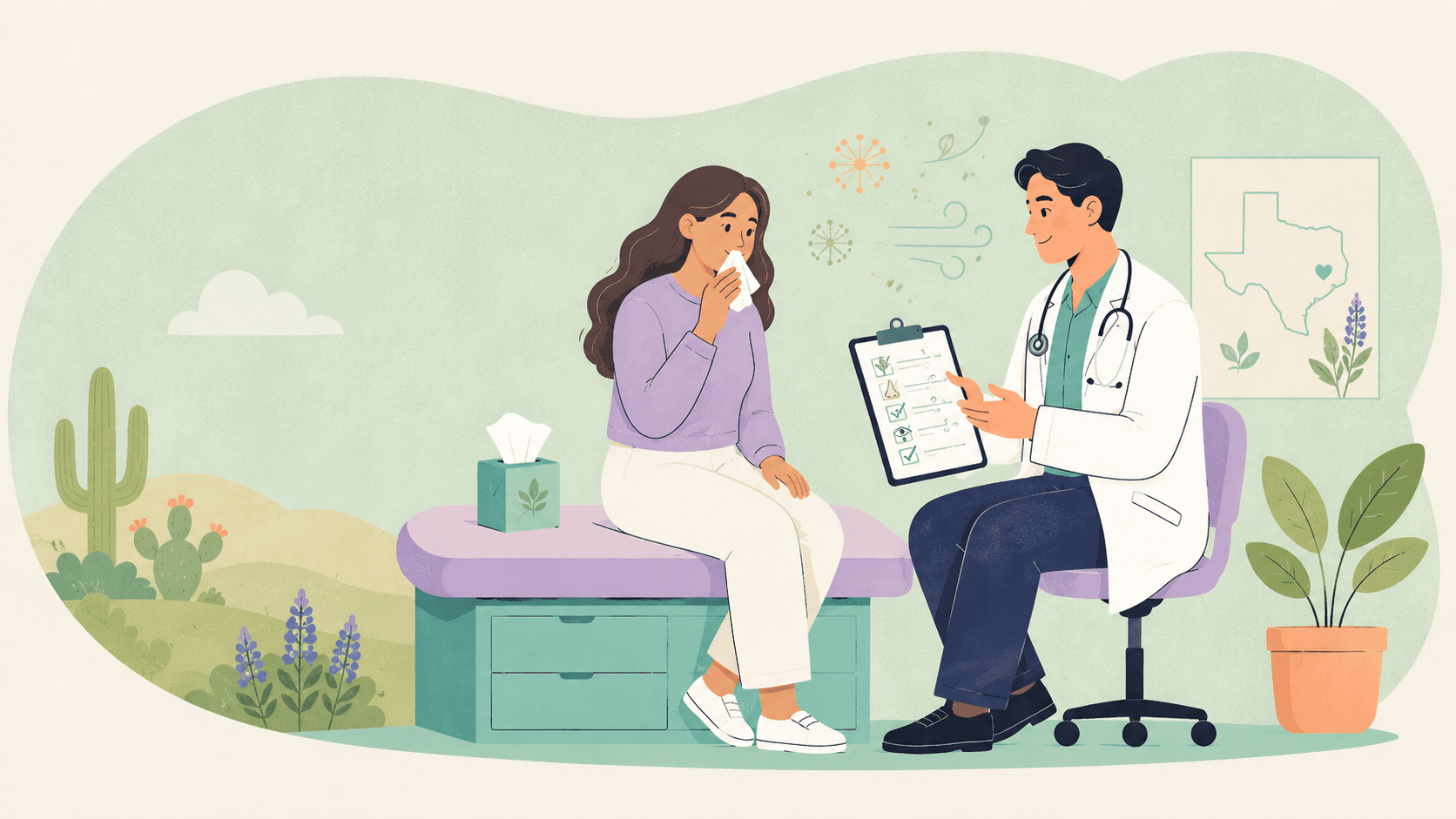
If you live in Cypress or anywhere in the Houston area, you already know: allergy season here is not really a season. It is more like three seasons stacked on top of each other, with a brief reprieve in December. Cedar in January, oak in March, ragweed in September, and mold year round. For a lot of patients, it feels like you never fully catch a break.
Why Cypress, TX Is Particularly Tough for Allergies
Southeast Texas ranks among the worst regions in the country for seasonal allergies. The combination of high humidity, long growing seasons, and the sheer density of tree cover in the Cypress area means pollen counts stay elevated for most of the year. The Piney Woods ecosystem that stretches across north and east Harris County produces massive amounts of tree pollen from December through May, and grass and weed pollen picks up from March through October.
The result? Many of our patients at FloMD are dealing with allergy symptoms for eight to ten months out of the year. And a significant percentage of them are treating it with over-the-counter medication that stops working, or they develop secondary issues like sinus infections, ear pressure, and asthma exacerbations that need real medical management.
The Four Allergy Seasons in Cypress, TX
Winter (December through February): Mountain cedar and juniper. Cedar fever is real, and it hits the Cypress area hard. Symptoms include severe nasal congestion, itchy watery eyes, and fatigue that patients often mistake for a cold or flu.
Spring (March through May): Oak, elm, ash, and pecan tree pollen. This is the peak season for tree pollen, and it overlaps with grass pollen starting in April. Pollen counts can exceed 10,000 grains per cubic meter on windy days.
Summer (June through August): Grass pollen and mold spores. The heat and humidity create ideal conditions for mold growth, especially after rain. Indoor mold in air conditioning systems is also a common trigger.
Fall (September through November): Ragweed is the big one, peaking in mid-September and lasting until the first hard freeze, which in Cypress can mean November or later. Ragweed pollen can travel for miles, so even if your yard is clear, it affects you.
When Over-the-Counter Medications Are Not Enough
Many patients come to us after months of cycling through Claritin, Zyrtec, Flonase, and every other allergy medication on the pharmacy shelf. Here is when it is time to see a doctor about your allergies:
Your symptoms last more than two weeks and are not improving with OTC medication
You develop sinus pressure or pain that feels like an infection
You are experiencing wheezing, shortness of breath, or chest tightness (this can indicate allergy-triggered asthma)
Your allergies are disrupting your sleep, work, or daily activities
You get recurrent sinus infections, three or more per year
Over-the-counter antihistamines make you drowsy or foggy, even the non-drowsy formulations
Prescription Options That Actually Work
When OTC medications stop working, we have several prescription options that provide real relief:
Prescription nasal sprays: Fluticasone propionate and budesonide are more effective than OTC sprays and can reduce inflammation in the nasal passages without the rebound effect of afrin-style decongestants.
Leukotriene modifiers: Montelukast (Singulair) blocks the immune system chemicals that cause allergy symptoms. It is particularly effective for patients who also have asthma.
Allergy immunotherapy: For patients with severe, persistent allergies, allergy shots or sublingual drops can actually change how your immune system responds to allergens over time. This is the closest thing to a cure for seasonal allergies.
Biologics: For severe allergic asthma and chronic hives, biologic medications like omalizumab target specific immune pathways. These require specialist coordination but can be life-changing for the right patient.
Practical Tips for Managing Allergies in Cypress
Medication helps, but lifestyle adjustments make a real difference too:
Check the daily pollen count. The American Academy of Allergy, Asthma, and Immunology has a reliable tracker, and several weather apps include pollen data for your zip code.
Keep windows closed during high-pollen days, especially in the early morning when pollen counts peak.
Shower and change clothes after spending extended time outdoors.
Run your air conditioner with a HEPA filter, and change the filter every 90 days, or more often during peak seasons.
If you spend time outdoors, wear a mask on high-pollen days. It looks odd, but it works.
Start your allergy medication two weeks before the season starts, not after you are already symptomatic. This gives the medication time to build up in your system.
Do Not Let Allergies Run Your Life
Cypress allergy seasons are brutal, but you do not have to just live with it. If your current regimen is not cutting it, or you are not sure whether your symptoms are allergies or something else, come see us. We will evaluate your symptoms, check for sinus involvement, and build a treatment plan that actually works for the specific allergens in our area.
Schedule an allergy consultation at FloMD Primary Care in Cypress. Same-day and telehealth appointments available.
