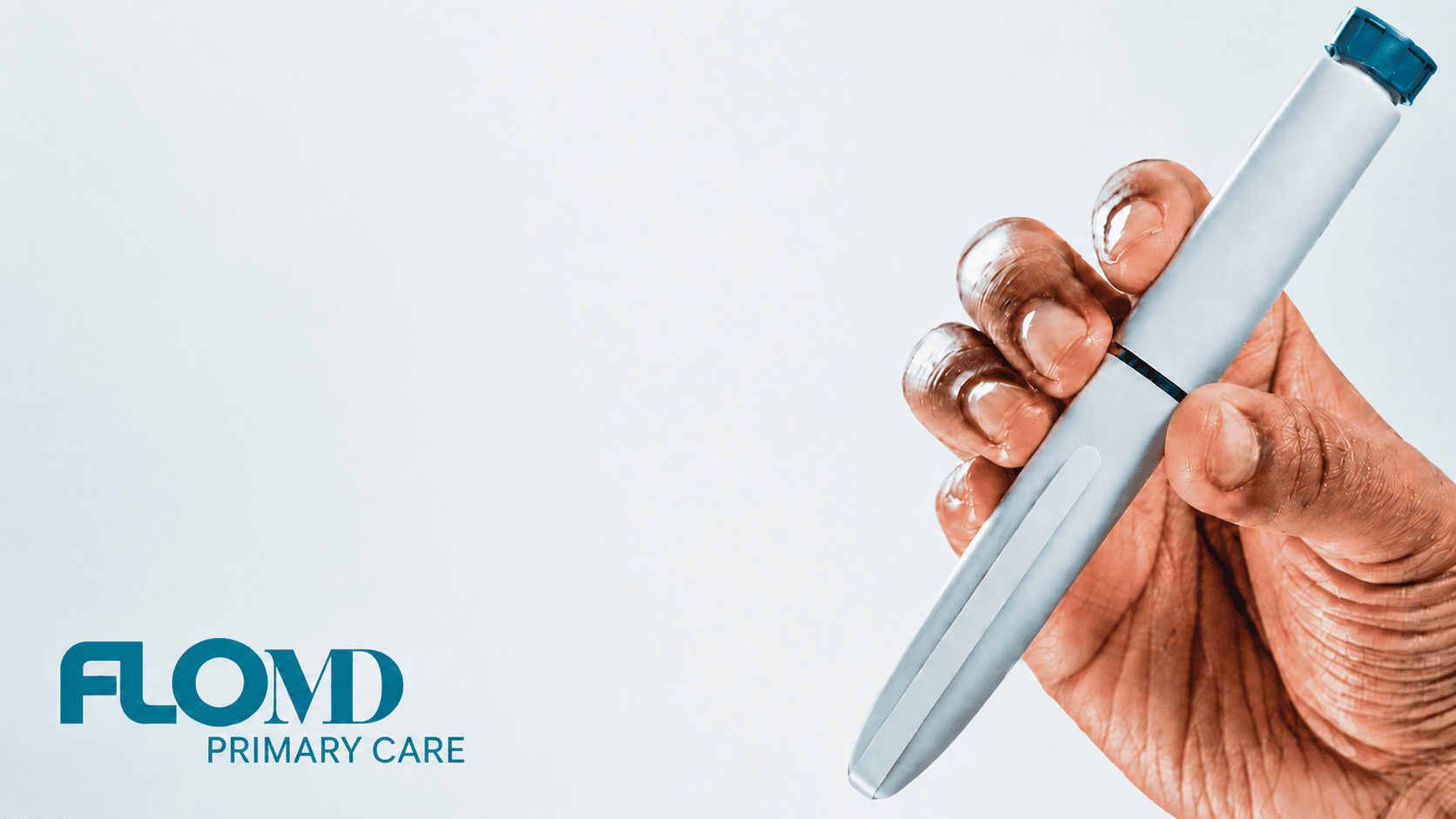
If you’ve been watching the headlines, you’ve probably heard about GLP-1 receptor agonists. Medications like semaglutide, known by brand names such as Wegovy and Ozempic, and tirzepatide, known as Zepbound, are generating real weight loss results for patients. But between the celebrity hype and the social media noise, it can be hard to find a straight answer about whether these medications are right for you.As a primary care physician, I see patients every week who are curious, cautious, and sometimes confused about what GLP-1 therapy actually involves. Here’s the science, the expectations, and what real medical supervision looks like: nothing exaggerated, just the facts.
What GLP-1 Receptor Agonists Actually Do
GLP-1, or glucagon-like peptide-1, is a hormone your body naturally produces in the gut after eating. It does three critical things: it signals your brain that you’re full, it slows down stomach emptying so you feel satisfied longer, and it boosts insulin secretion while suppressing glucagon, which helps regulate blood sugar.The medications we’re talking about are essentially enhanced versions of this natural hormone. They were originally developed for type 2 diabetes, but researchers noticed something striking: patients were losing significant amounts of weight. Semaglutide clinical trials showed an average 15% body weight reduction over 68 weeks, results that no previous medication had come close to achieving.
Why Medical Supervision Is Not Optional
GLP-1 medications are not a one-and-done prescription. They require ongoing medical oversight.When I start a patient on semaglutide or tirzepatide, we stay in regular contact. We monitor for side effects like nausea, adjust dosages gradually over several weeks, check lab work when appropriate, and make sure the weight loss is happening in a healthy, sustainable pattern.The versions flooding online pharmacies and med spas are often compounded medications. While compounded medications may have a role in certain situations, they are not the same as FDA-approved brand-name medications. They may vary in formulation, dosing, sourcing, and quality depending on where they are prepared.At FloMD, we take a medical-first approach. That means reviewing your health history, discussing the risks and benefits of each option, monitoring your response, and making sure your treatment plan is based on your body, not a one-size-fits-all protocol downloaded from the internet.
Semaglutide vs. Tirzepatide: Understanding Your Options
Right now, there are two main contenders in the GLP-1 weight loss space, and they work differently.Semaglutide, known as Wegovy for weight loss, is a GLP-1 receptor agonist. It is injected once weekly. Clinical trials showed approximately 15% average weight loss. It is also approved for cardiovascular risk reduction in certain overweight patients with heart disease.Tirzepatide, known as Zepbound, is a dual GLP-1/GIP receptor agonist. It is also injected once weekly. The SURMOUNT trials showed approximately 22% average weight loss, the highest of any approved weight loss medications to date.Neither medication is a magic shot. Both work best when combined with dietary changes and physical activity. The medication can make those changes easier to sustain because you are no longer fighting constant hunger signals.
Who Is a Good Candidate for GLP-1 Therapy?
At FloMD Primary Care, we follow evidence-based guidelines when evaluating patients for GLP-1 therapy. You may be a candidate if you meet these criteria:
BMI of 30 or higher, which falls in the obesity range
BMI of 27 or higher, which falls in the overweight range, with at least one weight-related condition such as hypertension, prediabetes, high cholesterol, or sleep apnea
No personal or family history of medullary thyroid carcinoma or multiple endocrine neoplasia syndrome type 2
Willingness to commit to regular follow-ups, monitoring, and lifestyle modifications
What Real Weight Loss Looks Like on GLP-1s
Social media shows you the before-and-after photos. What those photos don’t show is that the first month is usually about dose titration. You start low, such as 0.25 mg for semaglutide, and increase gradually every four weeks.This approach helps minimize gastrointestinal side effects, but it also means meaningful weight loss typically does not begin until month two or three. By months four through six, patients often notice clothes fitting differently, labs improving, and energy levels shifting.The six-month mark is usually when we evaluate whether the current dose is working or whether adjustments are needed. I always remind patients that this is a marathon, not a sprint. The clinical trials run 68 weeks or longer for a reason. Sustainable results require sustainable commitment.
Side Effects: What to Actually Expect
Here’s the full picture on side effects.Nausea is the most common side effect, affecting about 20% of patients, especially during dose increases. It usually resolves within a few days as your body adjusts.Constipation or diarrhea affects roughly 10% to 15% of patients. Hydration and fiber intake become even more important.Muscle loss is a real concern. Up to 40% of weight lost can be lean mass if you are not resistance training and eating adequate protein. This is precisely why medical supervision matters.“Ozempic face,” the facial volume loss some people experience with rapid weight loss, is cosmetic, not dangerous, and can often be managed with proper nutritional support.
“The patients who succeed long-term on GLP-1 therapy are the ones who use the medication as a tool, not a cure. It quiets the food noise so you can build the habits that actually last.”
Why Insurance Coverage Varies
One of the biggest questions I get is: will my insurance cover this? The answer depends on your plan, your BMI, your medical conditions, and sometimes which medication is prescribed.Wegovy, which is semaglutide 2.4 mg for weight loss, has broader insurance coverage than many people realize, but prior authorization is almost always required. At FloMD, our team handles the prior authorization paperwork and advocates on your behalf with your insurance company.If coverage is denied, we help you understand your options, including whether compounded medications may be appropriate to discuss. Compounded GLP-1 medications are not identical to FDA-approved brand-name medications, and they should only be considered with careful medical supervision, clear dosing instructions, and a full discussion of potential risks and benefits.We also help you understand the full picture: monthly costs, expected duration of treatment, monitoring needs, and what happens if you need to transition to a different medication.
Starting Your Weight Management Journey
At FloMD Primary Care, we’ve built our weight management program around three principles: evidence-based prescribing, real medical oversight, and patient-first communication.Whether you’re exploring semaglutide, tirzepatide, compounded medication options, or simply want to talk through your choices, your first visit is a conversation, not a sales pitch. We review your full medical history, run appropriate labs, discuss your goals, and decide together whether GLP-1 therapy fits your life.If it does, we walk that path with you. If it doesn’t, we discuss alternatives.If you’re considering GLP-1 therapy, the best first step is a medical conversation about your health history, goals, lab work, and long-term plan. At FloMD Primary Care in Cypress, we help patients understand their options clearly and choose a path that is safe, realistic, and medically supervised.
